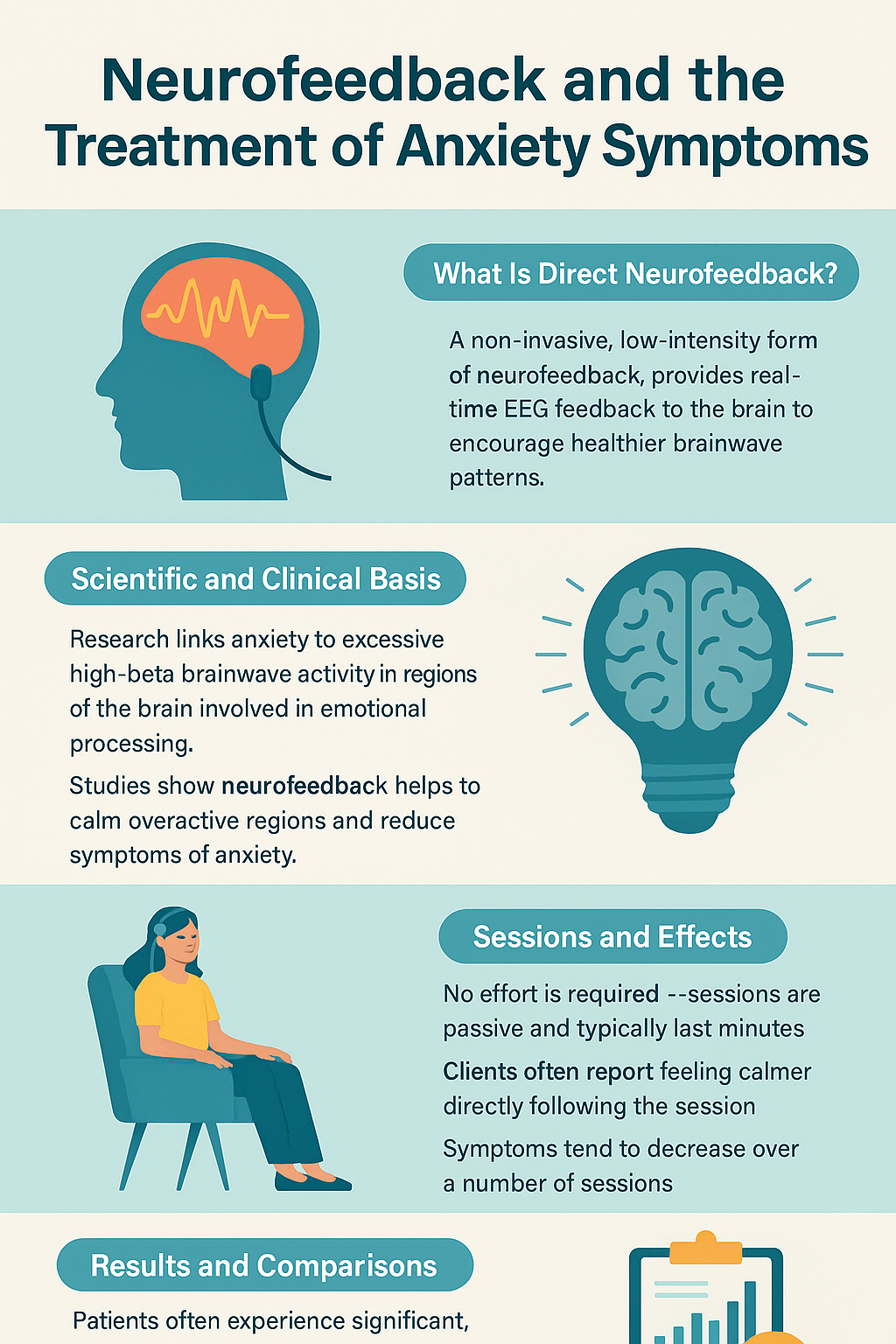
Neurofeedback (Direct Neurofeedback) and the Treatment of Anxiety Symptoms
Published on April 24, 2025
Understanding Anxiety Symptoms in 2025
Anxiety symptoms have reached record levels across all age groups in 2025. Teens, college students, professionals, and older adults alike are facing rising levels of chronic stress, worry, irritability, insomnia, and emotional overwhelm. These symptoms often stem from a hyperactive fear response in the brain, especially in the amygdala and limbic system, resulting in a constant state of vigilance.
The Problem: Traditional Treatments Don’t Work for Everyone
While cognitive behavioral therapy (CBT), SSRIs, and lifestyle changes help many people, a significant number of individuals continue to experience persistent anxiety symptoms. Some are treatment-resistant, while others seek options with fewer side effects or less dependence on medications. This is where Direct Neurofeedback (also known as microcurrent neurofeedback or low energy neurofeedback) offers new hope.
What is Direct Neurofeedback?
Direct Neurofeedback is a cutting-edge technology that uses extremely low-strength electrical signals—far below the power of traditional neurofeedback—to prompt the brain to ‘reset’ its stuck patterns. It’s not about training the brain, but rather nudging it toward balance by interrupting maladaptive feedback loops. Sessions are passive and painless, often lasting less than 30 minutes.
How Direct Neurofeedback Helps with Anxiety Symptoms
When someone struggles with anxiety symptoms, their brain is often caught in a loop of overactivation—especially in the limbic system. Direct Neurofeedback gently disrupts these patterns, helping the brain regain flexibility. Clients frequently report feeling calmer, sleeping better, and experiencing a reduction in obsessive thoughts or chronic worry after just a few sessions.
Clinical and Research Support for Direct Neurofeedback
Clinical reports and preliminary studies suggest that Direct Neurofeedback significantly reduces anxiety symptoms in both adults and adolescents. One study found that over 80% of participants reported measurable improvements in anxiety, sleep, and mood regulation after 6–8 sessions. It has also shown promise for PTSD, generalized anxiety disorder (GAD), panic disorder, and performance-related anxiety.
What Sessions Are Like
Clients sit comfortably while electrodes are placed on the scalp. A microcurrent signal—so faint that it’s usually imperceptible—is sent to the brain for a few seconds at a time. There’s no need for concentration, effort, or doing tasks. Many clients feel immediate shifts, such as a sense of clarity, calmness, or emotional release.
How It Compares to Other Treatments
Unlike traditional neurofeedback, which requires active participation and long-term training, Direct Neurofeedback often provides quicker results with fewer sessions. Compared to medication, it has no systemic side effects and can be safely used alongside therapy, CES devices like the CalmBox, breathing strategies, tapping, and nutritional interventions.
Why Choose Direct Neurofeedback for Anxiety Symptoms?
For those who haven’t responded to therapy or medication—or who are looking for a natural and non-invasive alternative—Direct Neurofeedback offers a transformative experience. It’s especially well-suited for individuals with PTSD, generalized anxiety, chronic stress, or nervous system dysregulation.
Getting Started: What to Expect
Most people begin with one or two sessions per week. Positive shifts are often noticeable within the first 3–5 sessions. A typical treatment plan includes 10–20 sessions, depending on individual needs. Direct Neurofeedback can be offered in professional counseling settings, neurotherapy clinics, or integrative wellness centers.
Final Thoughts: A Gentle Reset for the Anxious Brain
Direct Neurofeedback doesn’t suppress symptoms—it restores balance. By nudging the nervous system out of its hyperaroused state, it supports deep healing and emotional regulation. For those overwhelmed by anxiety symptoms in 2025, it may be the reset button the brain has been waiting for.