Cranial Electrical Stimulation for Anxiety and Related Disorders: Evidence and Clinical Applications
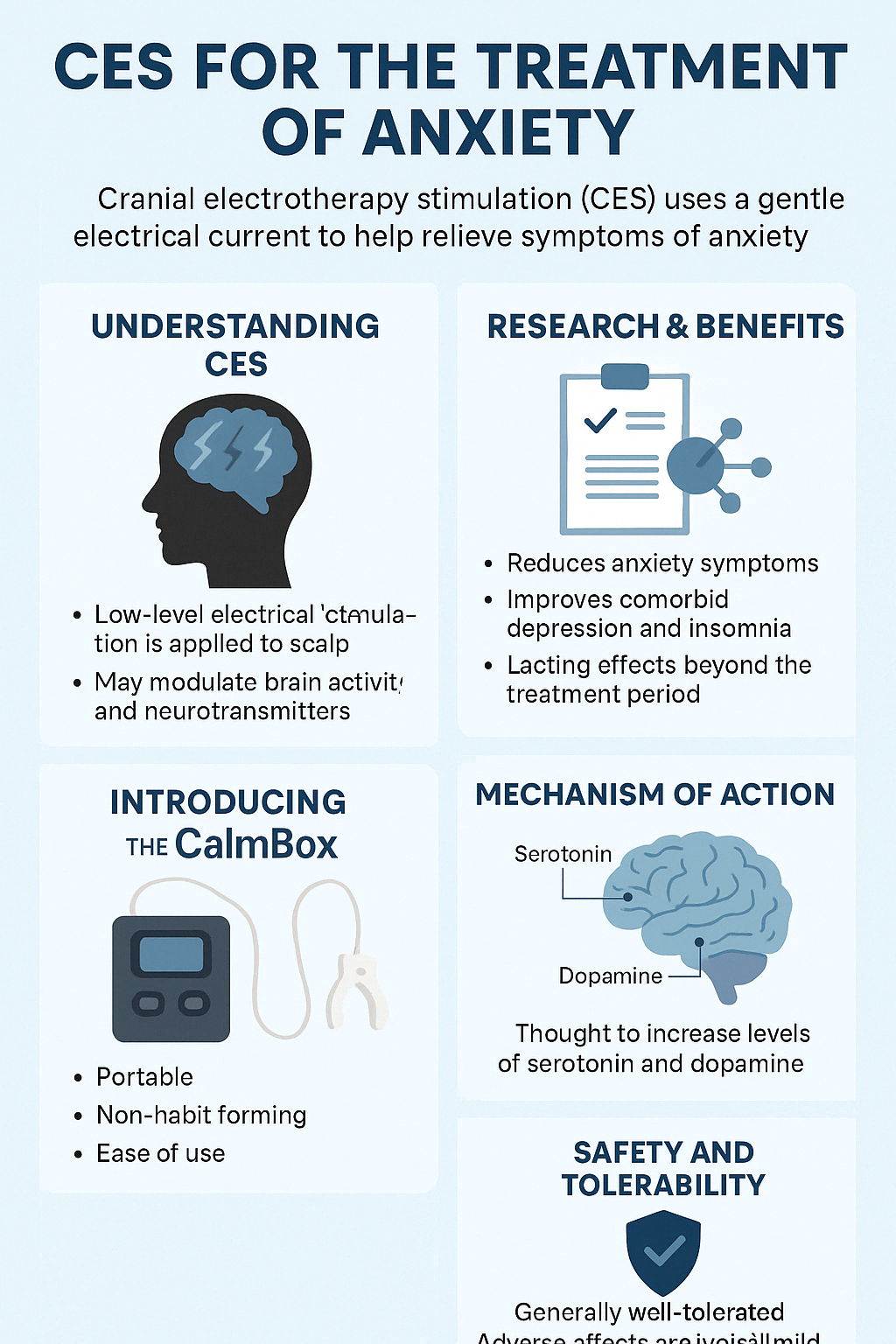
Cranial electrical stimulation (CES) has gained attention as a non-invasive, drug-free intervention for anxiety, generalized anxiety disorder (GAD), stress, and related conditions. While traditional treatments like cognitive-behavioral therapy (CBT) and SSRIs remain first-line options, CES offers a complementary approach with a favorable safety profile. This review synthesizes current evidence on CES efficacy, mechanisms, and practical considerations for anxiety-related disorders.
Mechanisms of Action
CES delivers low-intensity electrical currents (typically 50 μA to 4 mA) via electrodes placed on the head, often on the earlobes or temples. Proposed mechanisms include:
Neurochemical modulation:
Increased alpha-wave activity linked to relaxation and reduced beta-wave activity associated with anxiety[1][2].
Stimulation of limbic system structures (e.g., amygdala, hypothalamus) and vagus nerve afferents, potentially regulating autonomic nervous system activity[2].
Elevated serotonin, beta-endorphins, and adrenocorticotropic hormone levels, which may stabilize mood and stress responses[1][2].
Autonomic effects:
Shift from sympathetic (fight-or-flight) to parasympathetic dominance, reducing physiological arousal[2].
Clinical Evidence for Anxiety Disorders
Efficacy Highlights
Generalized Anxiety: A 2023 meta-analysis of 8 RCTs (n = 337) found CES significantly reduced anxiety symptoms (effect size = -0.96, p < 0.00001) compared to sham devices[3][4]. The Alpha-Stim device showed consistent results across studies (ES = -0.88 to -1.05)[3].
Comorbid Depression and Insomnia:
Anxiety with depression: CES reduced depressive symptoms (ES = -0.69, p = 0.003)[3].
Insomnia: Improved sleep quality (ES = -1.02, p = 0.0006)[3][4].
Treatment-Resistant Cases: ECRI’s 2024 review of 630+ patients reported CES efficacy even when medications failed[5].
Limitations and Mixed Findings
Methodological Concerns: Small sample sizes, inconsistent stimulation parameters, and difficulty blinding participants due to device sensations[6][2].
Variable Responses: Some studies noted heterogeneity in outcomes, particularly for comorbid conditions[7].
Practical Applications
Device Options and Protocols
Typical Protocol:
Session Duration: 20–60 minutes daily
Electrode Placement: Earlobes, temples, or mastoid processes
Course: 3–6 weeks for sustained effects[1][2].
Safety and Accessibility
Adverse Effects: Mild and transient (e.g., skin irritation, dizziness) in <1% of users[6][1].
Cost: $600–$1,200 for devices; rarely covered by insurance[5].
Prescription Requirement: FDA mandates physician authorization in the U.S.[5].
Key Considerations for Clinicians
When to Recommend CES
As adjunctive therapy for partial responders to SSRIs or CBT.
For patients preferring non-pharmacological options.
In cases of medication intolerance or contraindications.
Limitations to Address
Lack of long-term efficacy data beyond 6 months[7].
Limited insurance coverage and high upfront costs[5].
Variable device quality (e.g., non-FDA-cleared products)[1].
Future Directions
Standardized Protocols: Optimizing current intensity, frequency, and session duration[2].
Biomarker Research: Identifying predictors of response via EEG or hormonal assays[1].
Integration with Digital Therapeutics: Pairing CES with app-based CBT or biofeedback.
Conclusion
CES demonstrates promise for reducing anxiety, stress, and comorbid symptoms, particularly with the Alpha-Stim device. While evidence supports its short-term efficacy and safety, clinicians should weigh its cost and accessibility against individual patient needs. Ongoing research aims to clarify its role in stepped-care models and long-term management of anxiety disorders.
⁂
https://alpha-stim.com/wp-content/uploads/2023/09/Cranial-Electrotherapy-Stimulation-for-Treatment-of-Anxiety-Depression-and-Insomnia.pdf
https://www.frontiersin.org/journals/human-neuroscience/articles/10.3389/fnhum.2021.625321/full
https://www.frontiersin.org/journals/psychiatry/articles/10.3389/fpsyt.2023.1157473/full
https://pmc.ncbi.nlm.nih.gov/articles/PMC10115990/
https://home.ecri.org/blogs/ecri-news/anxiety-can-be-treated-with-cranial-electrical-stimulation-therapy-evidence-review-finds
https://pmc.ncbi.nlm.nih.gov/articles/PMC9218324/
https://www.hsrd.research.va.gov/publications/esp/CES.pdf