The Different Types of ADHD: A Parent’s Guide to Understanding Your Child’s Unique Brain
Quick Summary for Parents:
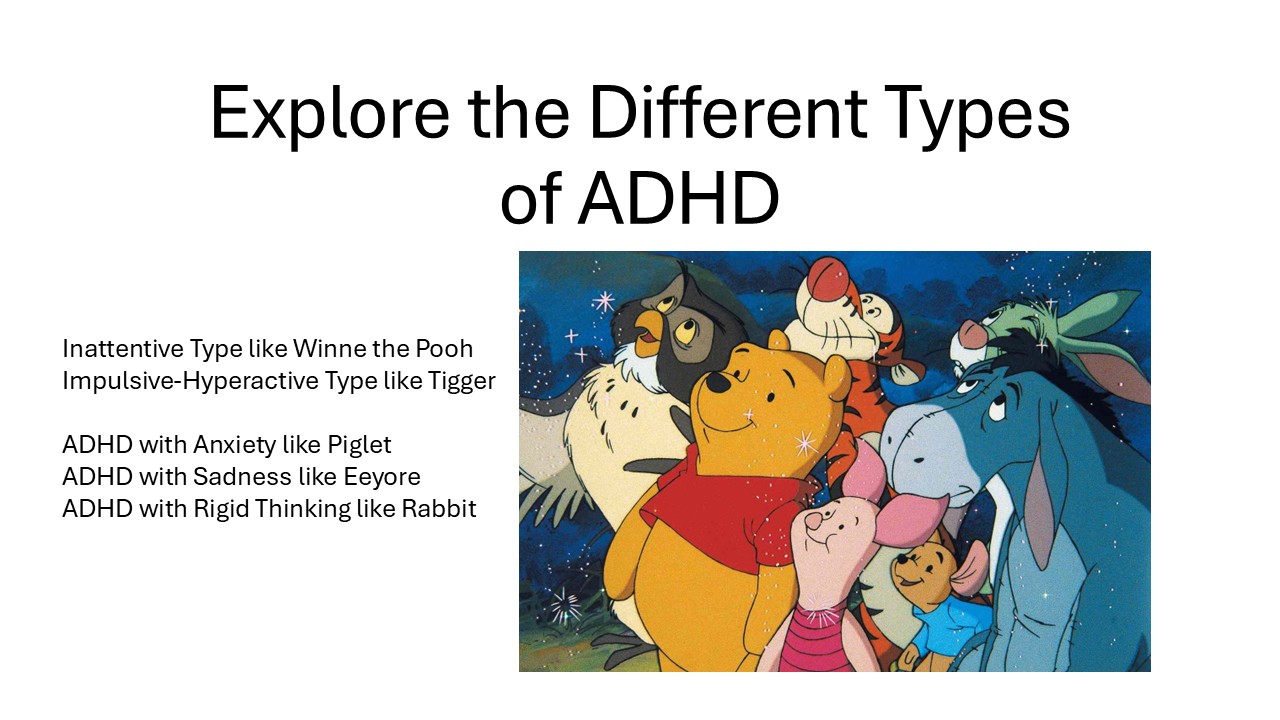
ADHD isn’t one-size-fits-all. Some kids are bouncy and loud. Others are dreamy and forgetful. Some struggle with worry or sadness. Understanding which type of ADHD your child has can help you find the right support strategies — whether you're using medication, neurofeedback, CES, or lifestyle interventions. This guide explains the six most common ADHD styles using relatable character types from Winnie the Pooh.
Understanding ADHD in 2025: It’s More Than Just Hyperactivity
For years, ADHD was diagnosed as either "inattentive," "hyperactive-impulsive," or "combined." But modern neuroscience — especially brain imaging research — has revealed that there are multiple subtypes of ADHD, each with distinct traits and brain patterns.
Dr. Daniel Amen, a psychiatrist known for using SPECT brain imaging, identified at least six types of ADHD, based on how different brain regions function (or don’t). We’ll explain those types in easy-to-understand terms — and even connect them to beloved characters from the world of Winnie the Pooh.
🐯 Tigger Type (Classic ADHD)
Key Traits:
· High energy, fidgety, constantly moving
· Impulsive and blurts out thoughts
· Easily distracted
· Loud and often interrupts
· Disorganized, forgetful
Brain Pattern:
Underactive prefrontal cortex — especially when trying to concentrate.
Common in:
Boys more than girls.
Support Strategies:
· Structure and routine
· Frequent movement breaks
· Neurofeedback and CES devices
· Behavior therapy focused on impulse control
· Mindfulness games and Dual-N-Back exercises to build working memory
🐻 Winnie the Pooh Type (Inattentive ADHD)
Key Traits:
· Daydreamy and mentally “checked out”
· Slow to start tasks
· Loses things often
· Struggles with time management
· Not disruptive — just not present
Brain Pattern:
Brain slows down during mental tasks — the opposite of what’s needed.
Common in:
Girls more than boys.
Support Strategies:
· Visual reminders and timers
· Rewards for task completion
· Brain stimulation tools like CES or cognitive training apps
· Positive reinforcement over punishment
· Stimulant medication may be helpful (consult your doctor)
🐰 Rabbit Type (Over-Focused ADHD)
Key Traits:
· Gets stuck on ideas or routines
· Argues constantly
· Worries excessively
· Perfectionistic or controlling
· Difficulty shifting attention
Brain Pattern:
Overactive anterior cingulate gyrus (the brain's "gear shifter").
Support Strategies:
· Flexible thinking exercises
· Omega-3 supplementation
· Calming tools like CES and sensory regulation activities
· Consider professional support for anxiety/OCD symptoms
🐷 Piglet Type (ADHD with Anxiety)
Key Traits:
· Nervous or fearful
· Startles easily
· Touches everything
· May talk non-stop
· Trouble calming down or feeling safe
Brain Pattern:
Over-aroused midbrain and limbic system (emotional centers).
Support Strategies:
· Calm breathing practices and grounding games
· Gentle structure and predictability
· Avoid overstimulation
· CES therapy for nervous system regulation
· Cognitive-behavioral strategies for managing fears
🐴 Eeyore Type (ADHD with Depression)
Key Traits:
· Low energy
· Pessimistic outlook
· Says “I don’t care” a lot
· Withdrawn or moody
· Struggles to complete tasks
Brain Pattern:
Overactive limbic system + underactive prefrontal cortex.
Support Strategies:
· Daily outdoor activity and movement
· Gratitude journaling and positive psychology exercises
· Stem cell patch technology (e.g., Lifewave X39) for those over 40
· Consider therapy for mood and self-esteem
🚩 Angry or Aggressive ADHD (No Pooh Character Here)
Key Traits:
· Severe mood swings
· Defiance
· Aggression
Brain Pattern:
May involve temporal lobe dysfunction.
Support Strategies:
· Full neuropsychological evaluation
· Trauma-informed care
· Nutritional strategies (omega-3s, healthy fats, no food dyes)
· Professional support with neurofeedback or CES
· May require medication (consult your provider)
Why This Matters
Not all ADHD looks the same — and not every child responds to the same treatments. By understanding your child’s ADHD type, you can choose smarter, more personalized interventions. These might include brain-based technologies like CES or neurofeedback, simple lifestyle changes, or counseling techniques tailored to their emotional needs.
Article Navigation
Previous Article: Coming soon – Intro to ADHD and Modern Brain Science
Next Article: Coming soon – Natural ADHD Treatment Options That Actually Work