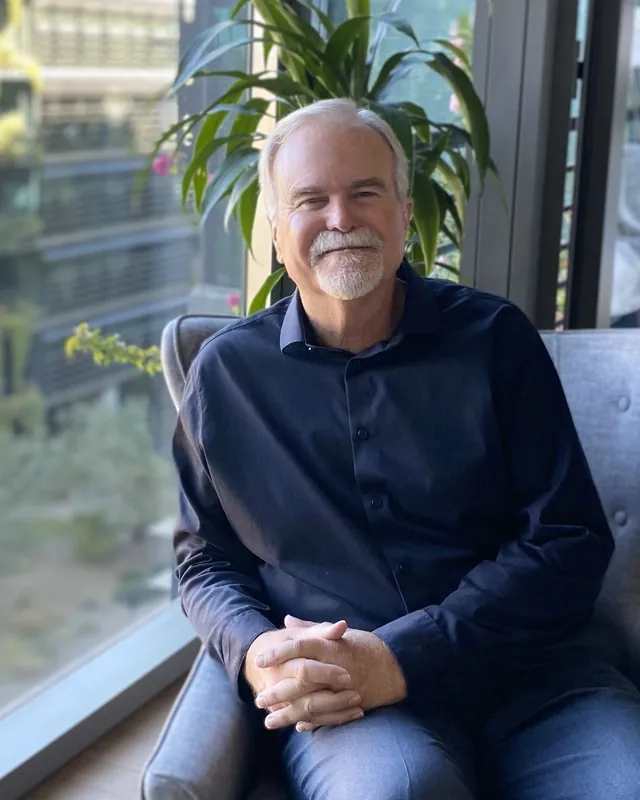
Maybe you’ve read a few articles here and recognized your situation, or yourself. I hope you’ve found articles that have been helpful to you. Maybe a family member is struggling with anxiety. Maybe ADHD is affecting your job performance or your teen’s schoolwork. Sometimes the next step is to meet with an experienced professional who can assess the situation and help you build a plan for moving forward.
I’m Dr. Douglas Cowan, Psy.D., LMFT. I’ve been a licensed professional in this field for 38 years. I help people with anxiety and ADHD build practical skills that work in real life: at home, at school, at work, and in the relationships that matter most.
Who I work with
- Adults dealing with anxiety, worry, burnout, or stress
- Adults whose ADHD symptoms are affecting their work, marriage, parenting, or other relationships
- Teenagers, ages 13 to 17, dealing with anxiety or ADHD symptoms
Because all of my sessions are held online by video, I don’t see children under 13 or provide couples counseling. If that’s what you’re looking for, a local specialist who works with children or couples in person will likely serve you better.
What we can work on
- Worry that won’t switch off, overthinking, and the need to know
- Panic, physical tension, and the body’s alarm system
- Avoidance that keeps your world getting smaller
- Sleep that suffers when your mind won’t rest
- For adults with ADHD: organization, follow-through, time management, and the stress and self-doubt that build up over the years
What working together is like
I approach counseling a bit like a coach (I was once a university baseball coach) and a bit like a pastor (yes, I’m also a former pastor). We look at what is getting in the way, choose a few practical skills, and try them between sessions. Then we look honestly at what helped.
A good working model is this: Performance = Potential − Interference. Your actual performance equals your potential minus whatever interferes with it. Potential can grow. Interference from stress, poor focus, a noisy brain, anxiety, and more can be reduced. Working on either one can make a real difference in the parts of life that matter most to you.
I believe every person carries real dignity and a real capacity to grow. If you want your faith to be part of our conversations, you’re welcome to bring it. If you don’t, I’ll respect that fully.
Where and how we meet
All sessions are by secure telehealth video, so you can meet from home or any quiet, private space. I can work with clients who live in Arizona, California, Oregon, or Washington. I don’t offer in-person appointments at this time.
If you live outside these four states, ask me. There may be some coaching opportunities available.
Fees
- Counseling: $200 per 55-minute session.
- Insurance: I can give you a superbill, a detailed receipt you can submit to your insurance company for possible partial reimbursement. Plans differ, and I can’t guarantee what your insurance will cover.
Assessments
As part of our work, I may ask you to complete brief questionnaires, such as the GAD-7 for anxiety, or screening questionnaires for ADHD symptoms, PTSD, or post-concussion symptoms when they apply. There’s no charge for these.
I also offer the Creyos cognitive assessment battery, which you complete online on your own laptop or desktop at home. It measures areas such as attention, memory, reasoning, and processing speed.
The fee is $200, the same as a session. It includes our time together reviewing your results, a treatment plan, and recommended exercises for cognitive performance. Follow-up assessments to measure change are available for an additional fee.
The assessment gives us a clear picture of how your thinking skills are working, and that picture helps guide treatment. On its own, it is not a diagnosis or a school or workplace accommodations evaluation. It’s available for teens and adults. You can learn more at creyos.com.
Tools for home
Some clients ask about tools they can use between sessions. If you’re curious about CalmBox, a home device for cranial electrotherapy stimulation (CES), ask me and we can talk about whether it makes sense for you. CES devices are FDA cleared for the treatment of anxiety symptoms and insomnia. Off-label uses include attention and athletic performance. You can watch a short introduction here.
How to reach me
I usually reply within 24 hours, weekends included.
When you email, please include:
- your name and the best phone number to reach you
- the state you live in
- whether you’re asking for yourself or your teen
- the days and times that usually work for you
Please leave out detailed health information for now. We can talk about that privately.
What happens after you reach out
- A free phone conversation. It usually takes 5 to 15 minutes. I’ll answer your questions about cost and insurance, and we’ll talk about whether I’m likely to be a good fit for what you need.
- Paperwork and assessment. If you decide to move forward, I’ll set up a secure client portal where you complete the intake paperwork and assessment.
- Your first appointment. Once the paperwork is done, we schedule your first session, usually within a few days.
Reaching out doesn’t commit you to anything, and your first message isn’t a scheduled appointment. It’s simply a conversation.
Questions people often ask
What happens in the first appointment?
We talk about what brought you here, what you’ve already tried, and what you’d like to be different. You’ll leave with a clearer picture and at least one practical step to try.
What do I need for telehealth?
A phone, tablet, or computer with a camera and a reliable internet connection, plus a quiet, private place to talk.
Do you take insurance?
I can give you a superbill to submit to your insurance company for possible partial reimbursement. I can’t promise what your plan will pay, so it’s worth calling your insurance company to ask about out-of-network mental health benefits.
I’m a parent. Can I make the first call for my teen?
Yes. Many families start that way. We’ll talk about how you and your teen will each be involved.
What if you’re not the right fit for me?
I’ll tell you honestly and help you think about other options.
What if I need help right now?
Email and voicemail aren’t watched for emergencies. In an emergency, call 911 immediately. In a crisis, call or text 988 now.
Your next step
Contact me to ask about appointments and whether my approach fits what you’re looking for. You don’t have to have it all figured out before you call.
Ask About Appointments Email Dr. Cowan
Disclosures
- My family and I have used the CalmBox CES device, and I have recommended it to clients for more than 20 years. My company, CalmWaves Brain Performance, LLC, distributes it from our website at a discounted price.
- I am a partner in CalmWaves Brain Performance, LLC, of Phoenix, Arizona, and QuantumWaves, LLC, of St. Louis, Missouri.
- I serve as Director of Mental Health Services for Advocates Recovery Services in Lynnwood, Washington.
- I serve on the Board of Directors of 88.3 LifeFM in Bakersfield, California.
- Over the years I have seen many approaches help the brain work the way it was designed to work. These include neurofeedback (direct and traditional), hyperbaric oxygen, cold plunges, red light therapy, LifeWave patches, specific vitamins and minerals, and for some clients a ketogenic or gluten-free eating plan. We can talk about whether any of these fit your situation.
- Many of my clients have done well with stimulant medication for certain ADHD symptoms. I don’t prescribe medication. Those decisions belong to you and your medical provider.
Educational content only. Nothing on this site is medical advice, and it does not replace an individual evaluation by a qualified professional.