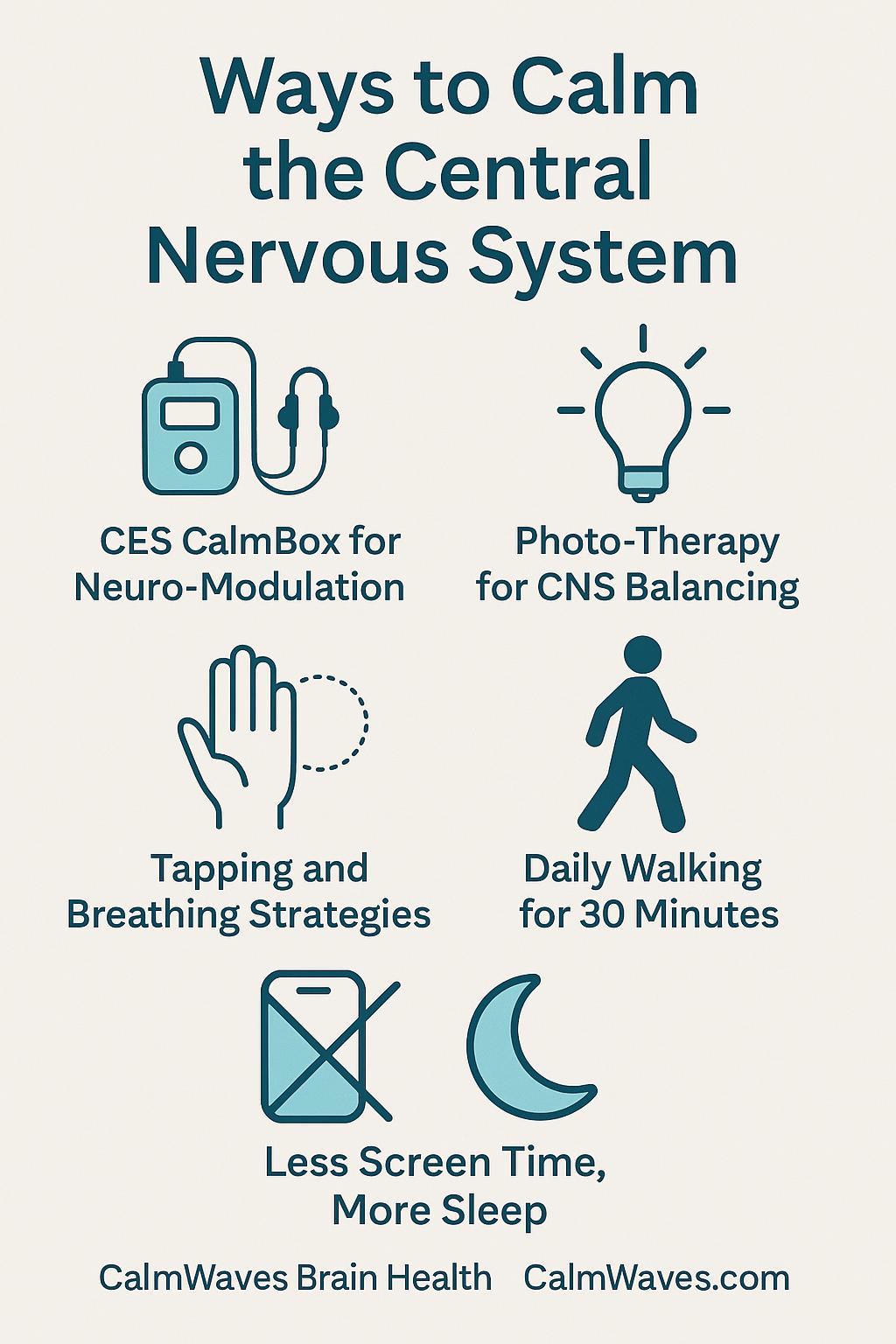
Anxiety is more than worry. It is a full-body experience that shows up in the nervous system before it ever reaches conscious thought.
Physical Symptoms
Racing heart. Tight chest. Shallow breathing. Stomach discomfort. Muscle tension, especially in the shoulders and jaw. Headaches that don't have a clear cause. Fatigue — the kind that comes not from activity but from the constant work of a nervous system on high alert. These are not imaginary. They are real physiological responses driven by a stress response that does not know when to stop.
Cognitive Symptoms
Difficulty concentrating. Racing thoughts. Catastrophic thinking — the brain runs immediately to the worst possible outcome. Trouble making decisions, because every option feels dangerous. Rumination: the same worries replaying on a loop that doesn't stop on its own.
Behavioral Symptoms
Avoidance. Withdrawal. Difficulty sleeping or sleeping too much. Irritability — anxiety often looks like anger on the surface, especially in children and teenagers. Checking and rechecking. Seeking reassurance constantly. Procrastinating on anything that might bring judgment or failure.
What This Brain Needs
The anxious brain is not defective. It is overloaded. It is working exactly as designed — protecting against threat — but it cannot reliably tell the difference between real danger and perceived danger. That is the problem to solve.
When you understand what is actually happening in the brain, the symptoms stop being mysterious. They become information. And information can be worked with.
There is a way forward. The brain that is stuck in alarm can learn to settle. That is what the right treatment does.