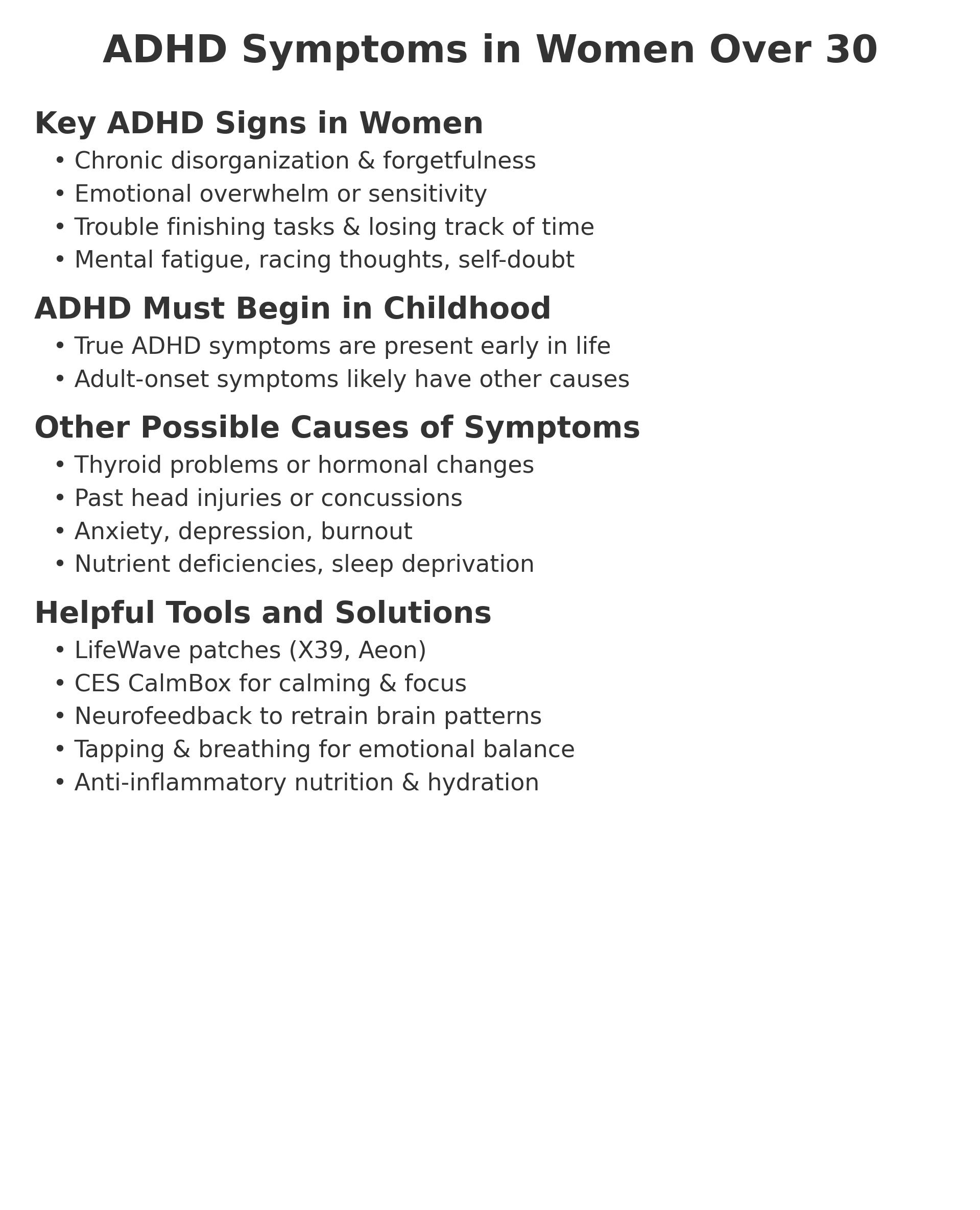
ADHD Symptoms in Adult Women Over 30
Have you recently begun to wonder if you might have ADHD? If you're a woman over 30 and struggling with focus, memory, emotional regulation, or chronic overwhelm, you're not alone. In fact, there's been a dramatic increase in women seeking ADHD evaluations—often after seeing social media posts that describe symptoms they’ve quietly lived with for years.
But here's a crucial truth: ADHD is a **neurodevelopmental disorder**, meaning the symptoms must be present in some form since childhood. If symptoms began **only** in your 30s or later, it's time to explore **other possible causes**, including hormonal shifts, thyroid problems, anxiety, depression, or even past head injuries. This article will help you sort it all out.
How ADHD Looks in Adult Women
Many adult women with ADHD were never diagnosed as children—especially if they were not disruptive or hyperactive. Instead, their symptoms may have looked like daydreaming, emotional sensitivity, or being ‘spacey.’ They may have been labeled sensitive, anxious, disorganized, or ‘too talkative.’ These same women now find themselves juggling careers, motherhood, relationships, and home life—while feeling like they’re barely keeping it together.
Common ADHD Symptoms in Women Over 30
· Chronic disorganization (mentally and physically)
· Emotional overwhelm, frustration, or feeling overstimulated
· Forgetfulness (especially of details or appointments)
· Difficulty starting or finishing tasks
· Losing track of time or misjudging how long things take
· Interrupting others or blurting things out unintentionally
· Trouble following through despite good intentions
· Feelings of shame, failure, or underachievement despite potential
Why Childhood Onset Matters
For a true diagnosis of ADHD, symptoms must have been present in childhood—even if they were not officially diagnosed. Think back to your early school years: Were you forgetful, easily distracted, emotionally reactive, or chronically disorganized as a child or teen? Did teachers or family members comment on your energy, inattention, or sensitivity?
If your symptoms truly began only recently—in your 30s, 40s, or 50s—it’s very unlikely to be ADHD. More often, these late-onset symptoms are signs of:
· Thyroid dysfunction** (especially hypothyroidism)
· Perimenopause or hormone imbalance**
· Chronic stress or burnout**
· Anxiety or depression**
· Post-concussion syndrome or past head trauma**
· Nutrient deficiencies** (like B12, iron, magnesium)
· Sleep deprivation or sleep apnea**
How to Know What’s Really Going On
A comprehensive evaluation is the best place to start. This may include:
· Cognitive performance testing (like the Creyos battery)
· Mental health screenings for anxiety, depression, and trauma
· Lab work to check thyroid, iron, vitamin D, and hormone levels
· Reviewing any history of head injury or whiplash
Supportive Solutions That Can Help—Whether or Not It’s ADHD
Whether your symptoms are rooted in ADHD or something else, the following tools can support focus, emotional balance, and brain function:
· LifeWave X39 and Aeon patches**: These phototherapy patches may reduce systemic inflammation, increase energy production, and support neural repair.
· CES CalmBox**: Cranial Electrotherapy Stimulation has been shown to reduce anxiety, improve sleep, and increase focus—all without medication.
· Neurofeedback**: Helps your brain build better regulation patterns, especially helpful if past trauma or injury is part of the picture.
· Tapping (EFT)**: A powerful technique for releasing emotional overwhelm, often used alongside therapy for anxiety, shame, or trauma.
· Breathing strategies**: Breathing patterns like the 4-4-6 or Supercharged Sigh can quickly calm the body and shift focus into a clearer state.
· Nutrition and hydration**: A diet rich in healthy fats, protein, and micronutrients supports neurotransmitter balance and brain health.
You’re Not Broken—You’re Wired Differently
If you’ve spent years wondering why everything feels harder than it should be—why you're so forgetful, scattered, or emotionally intense—it might not be a lack of discipline. It might be a unique brain wiring that simply needs the right support. Or it could be that your body is flagging an imbalance or injury that deserves attention.
Either way, there are solutions. Don’t suffer in silence. Start with curiosity, compassion, and a willingness to explore both biological and neurological roots. Relief is possible, and hope is real.